admin
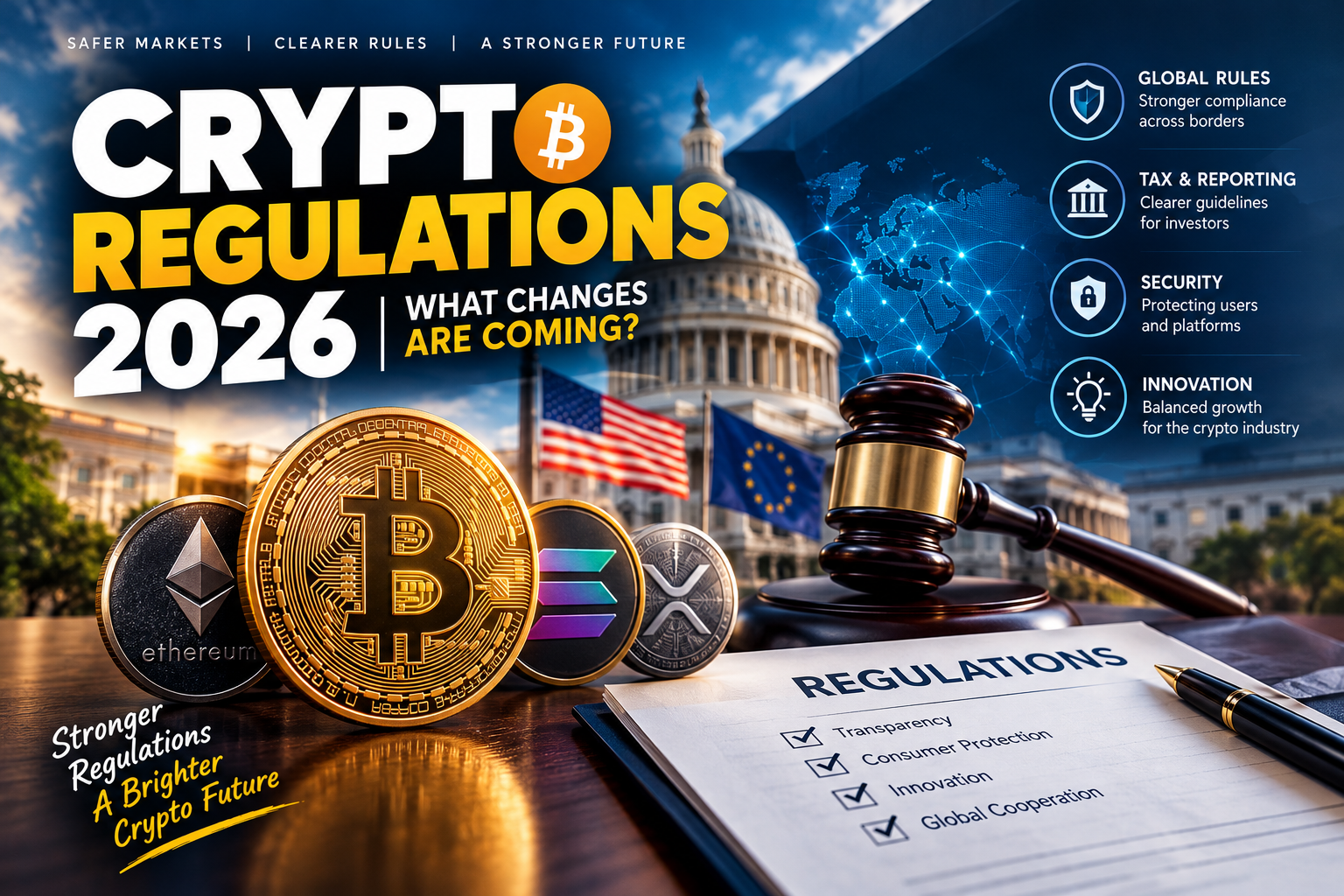
Cryptocurrency has developed from a niche digital experiment into an important part of the global financial industry. Bitcoin, Ethereum, stablecoins, decentralized finance, and tokenized assets now attract individual investors, financial institutions, technology companies, and governments. As the industry expands, Crypto Regulations 2026 are becoming increasingly important for determining how digital assets can be issued, traded, stored, and used.
In 2026, governments are working to balance financial innovation with investor protection, market integrity, and financial stability. Some jurisdictions are introducing licensing requirements for cryptocurrency exchanges, while others are strengthening anti-money-laundering rules, stablecoin oversight, and reporting obligations. These changes affect not only crypto businesses but also ordinary users who buy, sell, or transfer digital assets.
The regulatory landscape differs significantly between countries. The European Union has introduced its Markets in Crypto-Assets Regulation, commonly known as MiCA. The United States continues to develop its digital-asset policy and supervisory framework. Meanwhile, Pakistan has established a dedicated legal and regulatory structure for virtual assets through the Virtual Assets Act 2026 and regulations published by the Pakistan Virtual Assets Regulatory Authority.
Understanding cryptocurrency regulations in 2026 is essential for investors, traders, blockchain developers, exchanges, and businesses planning to operate in this evolving market. This article explores the latest regulatory developments, the role of stablecoins, compliance requirements, potential benefits, and the challenges that remain.
What Are Crypto Regulations?
Crypto regulations are laws, rules, and supervisory requirements that govern activities involving cryptocurrencies and other digital assets. These rules can apply to cryptocurrency exchanges, wallet providers, token issuers, stablecoin companies, custodians, investment funds, and other service providers.
The purpose of regulation is to establish clear responsibilities for businesses and reduce risks associated with fraud, market manipulation, money laundering, terrorist financing, and inadequate consumer protection. Depending on the country, regulations may also address taxation, financial reporting, cybersecurity, and the classification of digital assets.
Not every cryptocurrency activity is regulated in the same way. A token that qualifies as a financial security may fall under securities legislation, while a fiat-backed stablecoin may be subject to payment or electronic-money requirements. Rules for centralized exchanges can also differ from those applicable to decentralized protocols.
For this reason, crypto compliance requires understanding both the type of digital asset involved and the jurisdiction where the relevant activity takes place. A company operating internationally may need to satisfy multiple legal frameworks rather than follow one universal set of cryptocurrency rules.
Why Cryptocurrency Regulations Matter in 2026
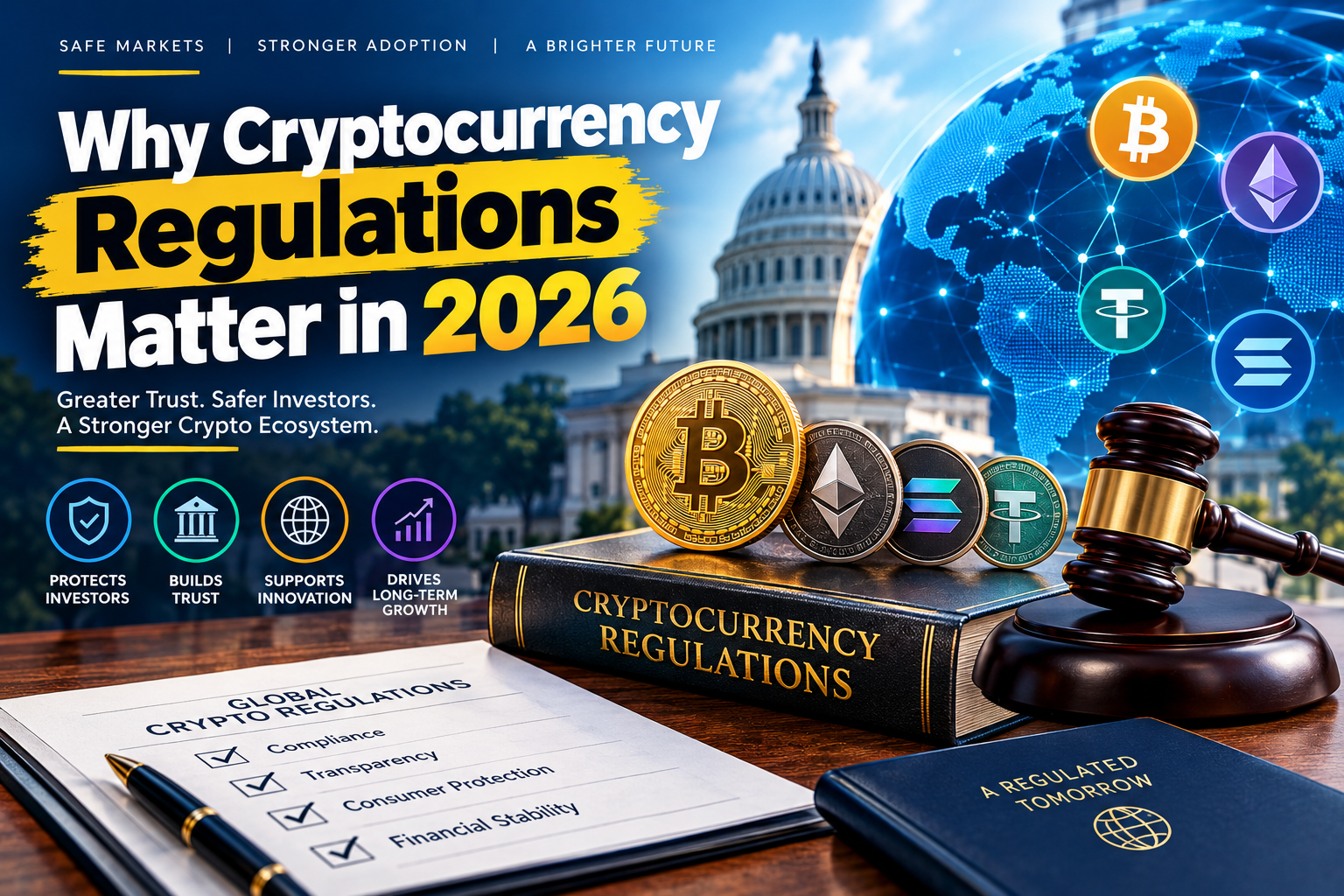
The cryptocurrency market operates across borders, making it difficult for any single country to oversee every transaction, platform, and service. Different regulatory approaches can create uncertainty for businesses and users, particularly when a platform serves customers in several countries.
Clear rules can help legitimate businesses understand licensing requirements, disclose risks, protect customer assets, and establish internal compliance procedures. Consistent supervision may also make it easier for traditional financial institutions to evaluate whether they can work with digital-asset companies.
However, regulation can introduce costs. Smaller companies may struggle with licensing fees, reporting obligations, legal reviews, and technical requirements. Excessively fragmented rules can also encourage businesses to relocate or limit access to certain markets.
The central challenge is finding a balance between cryptocurrency innovation and investor protection. Effective regulation should address genuine risks while allowing responsible products and services to develop.
Latest Crypto Regulation Trends in 2026
Several major trends are shaping the cryptocurrency industry in 2026. Regulators are paying greater attention to stablecoins, cross-border supervision, customer asset protection, and the risks associated with new digital financial products.
Stronger Stablecoin Oversight
Stablecoins are digital assets designed to maintain a relatively stable value, often by tracking a currency such as the US dollar. They are widely used for trading, transfers, and access to digital-asset markets.
Their growing importance has prompted regulators to examine reserve assets, redemption rights, liquidity management, governance, and disclosures. Authorities want users to understand what supports a stablecoin and whether they can redeem it under the conditions promised by its issuer.
In October 2026, the European Banking Authority classified USDC as the first significant e-money token under the EU’s MiCA framework. The EBA announced that additional supervisory responsibilities for the token would transfer to it from November 12, 2026, while the relevant national authority would retain other supervisory responsibilities. This development illustrates how stablecoin oversight is becoming more detailed as these assets grow in scale and financial importance.
More Detailed Licensing Requirements
Cryptocurrency businesses may need authorization before offering regulated services in a particular market. Depending on local law, requirements can cover exchange operations, custody, trading platforms, brokerage, transfers, and certain investment-related services.
Licensing frameworks typically examine ownership structures, management suitability, financial resources, cybersecurity, operational resilience, and customer protection. Authorities may also require companies to maintain records and report suspicious activity.
For businesses, crypto exchange licensing is increasingly a core part of market-entry planning. Operating in one jurisdiction does not automatically grant permission to serve customers worldwide.
Greater Focus on Consumer Protection
Regulators are also examining how cryptocurrency products are marketed and sold. This includes misleading advertising, unrealistic profit promises, undisclosed conflicts of interest, and unclear descriptions of investment risks.
Customer protection may involve clear fee disclosures, complaints procedures, secure custody arrangements, and appropriate warnings about volatility. Some investment products may be subject to suitability or disclosure requirements depending on the jurisdiction.
These protections matter because cryptocurrency users may have limited recourse if a platform fails, a private key is stolen, or an investment loses value.
Crypto Regulations in the United States
The United States has a complex regulatory environment in which several agencies may have responsibilities depending on the asset and activity involved. Securities laws, commodities rules, banking requirements, money-transmission laws, and anti-money-laundering obligations can all affect the cryptocurrency sector.
The Securities and Exchange Commission (SEC) oversees securities markets and applies securities laws where relevant. The Commodity Futures Trading Commission (CFTC) has responsibilities involving derivatives and certain commodity-market activities. Other agencies may oversee banking, sanctions compliance, financial crime prevention, and tax reporting.
This division of responsibilities can create uncertainty when a digital asset has characteristics that overlap with existing financial categories.
In September 2026, the SEC proposed modernizing transfer-agent infrastructure and allowing registered transfer agents to use distributed-ledger technology for securities ownership records. This illustrates how blockchain technology is also being considered within traditional financial-market infrastructure. <Cite refs={[“turn518012search7”]}/>
For crypto businesses, the practical implications depend on the services offered, the assets involved, and the customers served. Companies should not assume that every cryptocurrency is treated as a security or that every token falls outside securities law.
Investors should likewise distinguish between regulatory approval of a particular product and a general endorsement of cryptocurrency investments.
Crypto Regulations in the European Union
The European Union has established a broad regulatory framework for many crypto-assets and related services through the Markets in Crypto-Assets Regulation (MiCA).
MiCA creates common requirements for covered crypto-asset issuers and service providers across EU member states. Depending on the activity, these requirements can include authorization, disclosures, governance, operational controls, and rules for certain categories of tokens.
The framework is designed to support a more consistent market while addressing risks to consumers and financial stability. However, MiCA does not replace every other financial-services law. Certain assets and activities may fall under separate legislation.
Regulatory attention is also shifting toward implementation and supervision. In October 2026, the European Securities and Markets Authority clarified supervisory expectations for services involving stablecoins that do not comply with applicable MiCA requirements. The guidance calls on relevant national authorities to supervise compliance and address continued access to such tokens through regulated service providers. <Cite refs={[“turn518012search3″,”turn518012search8”]}/>
The European Banking Authority has also identified potential areas for reviewing MiCA, including multi-issuer stablecoin arrangements, asset classification, and crypto-asset lending. These are recommendations for further consideration, not proof that every proposed change has already become law. <Cite refs={[“turn518012search6”]}/>
For businesses operating in Europe, monitoring official regulatory updates is important because authorization and token-eligibility requirements can affect which services they may offer.
Crypto Regulations in Pakistan in 2026
Pakistan is an important market to watch because digital assets have attracted interest from users, technology businesses, and the broader financial sector. The country has moved toward a dedicated framework for regulating virtual-asset activities.
According to the official Pakistan Virtual Assets Regulatory Authority website, the Virtual Assets Act 2026 provides the primary legislation governing virtual assets in Pakistan. PVARA identifies itself as the independent federal regulator established under that Act. Its regulatory documents also list the Pakistan Virtual Asset Services Regulations 2026 and Pakistan Virtual Asset Services Activity Specific Regulations 2026, notified on August 21, 2026. <Cite refs={[“turn518012search2”]}/>
This represents an important development for the formal oversight of virtual-asset service providers.
What the Framework Means for Crypto Businesses
A dedicated regulatory authority can provide a clearer process for businesses seeking to understand the rules applicable to their operations. Depending on the specific service and applicable requirements, companies may need to obtain authorization, meet governance standards, implement customer due diligence, and maintain appropriate risk controls.
Businesses should review the official PVARA rules directly to determine which requirements apply to their activities. The obligations for an exchange, custodian, token issuer, or another service provider may differ.
What Pakistani Crypto Users Should Know
Individual users should distinguish between the existence of a regulatory framework and the authorization status of a particular company. A platform’s claim that it is compliant should be checked against official regulatory information.
Users should also review the applicable tax rules, banking arrangements, platform terms, and any restrictions that may affect their transactions. A regulatory framework does not eliminate investment risk, guarantee that customer funds are recoverable, or ensure that every digital asset is legitimate.
Because Pakistan’s framework is developing, readers should consult PVARA’s official publications for the latest requirements rather than relying on outdated social media posts or informal summaries.
Crypto Tax Regulations and Reporting Requirements
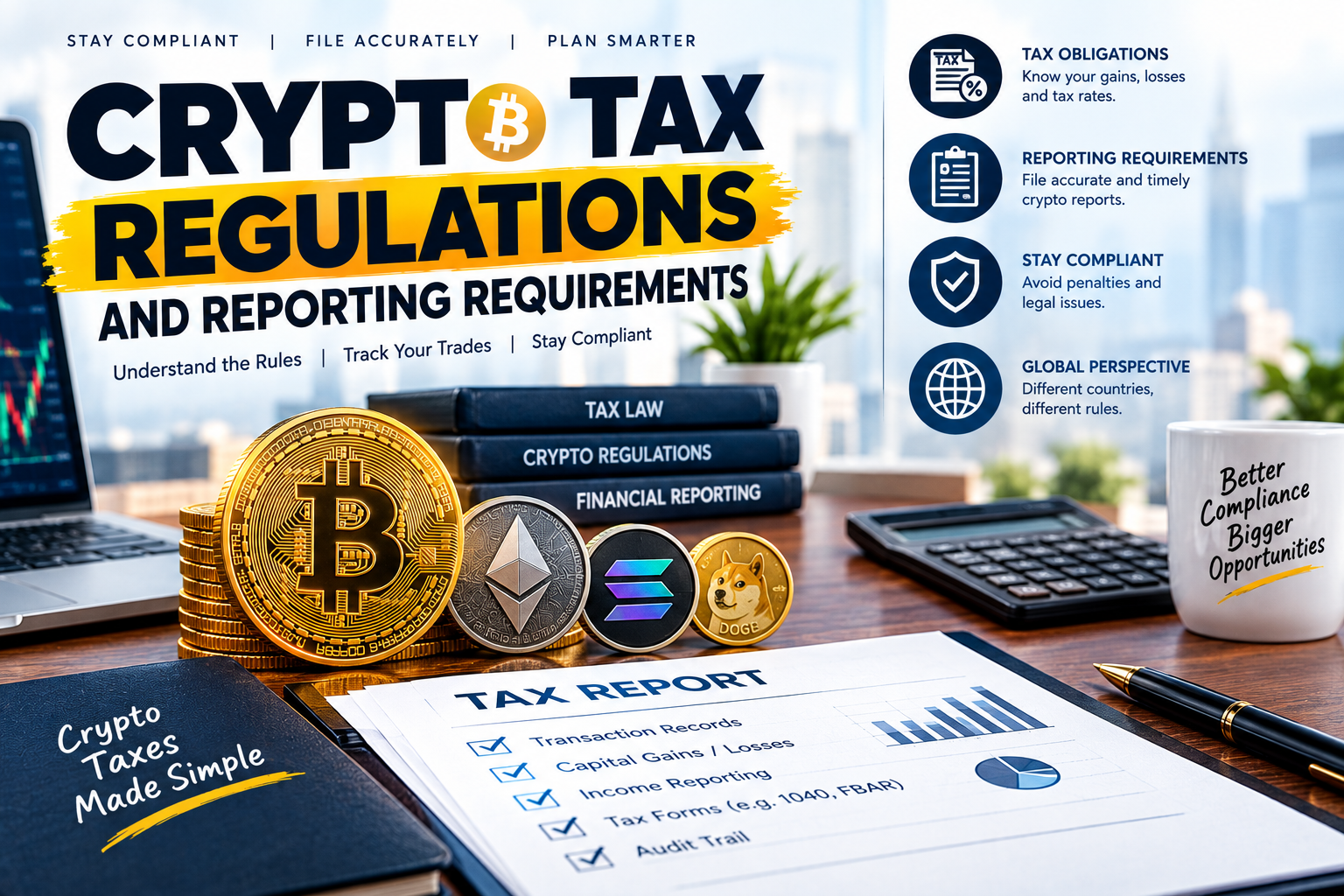
Tax treatment is another major part of cryptocurrency compliance. Depending on local law, profits from selling digital assets may be treated as capital gains, trading income, business income, or another taxable category.
Tax rules can also apply to activities such as receiving cryptocurrency as payment, mining, staking rewards, token swaps, and certain transfers. The exact treatment varies between jurisdictions and depends on the transaction and the taxpayer’s circumstances.
Keeping accurate records is therefore essential. Investors may need to retain transaction dates, asset quantities, purchase costs, sale proceeds, fees, and supporting exchange statements.
Cryptocurrency users should not assume that using a foreign exchange, a self-custody wallet, or a decentralized protocol automatically removes tax obligations. Reporting requirements may apply even when no traditional bank transfer occurs.
For businesses, tax compliance can involve additional accounting processes and reporting responsibilities. Professional advice may be appropriate when transactions are frequent, cross-border, or difficult to classify.
Anti-Money-Laundering Rules and KYC
Anti-money-laundering and counter-terrorist-financing requirements are central elements of many cryptocurrency regulatory frameworks.
Regulated service providers may be required to verify customer identities, monitor transactions, maintain records, assess risks, and report suspicious activity to relevant authorities. These obligations are commonly associated with Know Your Customer (KYC) and anti-money-laundering compliance.
The precise requirements depend on local law and the type of service offered. Not every decentralized application or wallet activity is subject to identical obligations, and the legal treatment of decentralized services remains an evolving area.
For legitimate businesses, effective compliance procedures can help reduce exposure to fraud, financial crime, sanctions violations, and regulatory penalties. For users, identity checks may provide an additional layer of accountability, although they can also raise privacy and data-security concerns.
Companies should ensure that personal information is collected and stored lawfully, protected against unauthorized access, and retained only as required under applicable rules.
How Crypto Regulations Affect Investors
Regulatory developments can affect investors through platform access, available tokens, transaction costs, disclosure requirements, and the range of investment products offered.
Clearer rules may encourage some financial institutions to enter the market and give users more information about the services they are using. Stronger custody and disclosure requirements may also improve transparency.
However, regulation does not make cryptocurrency a risk-free investment. Bitcoin and other digital assets can experience substantial price fluctuations, and a licensed platform can still face operational problems or business failure.
Rules can also limit access to particular tokens or services. For example, a provider may stop offering an asset if it cannot meet the relevant requirements in a particular jurisdiction.
Investors should therefore verify platform authorization where applicable, understand the risks of self-custody, secure their accounts, and avoid relying on regulatory status as the sole basis for an investment decision.
Challenges Facing Global Crypto Regulation
Despite progress, cryptocurrency regulation remains difficult because digital assets move across national borders and new technologies develop rapidly.
One challenge is regulatory fragmentation. A service permitted in one country may be restricted in another, creating complexity for global businesses and users. Differences in token classification, tax treatment, and licensing rules can increase compliance costs.
Another challenge is decentralized finance, or DeFi. Some protocols operate without a conventional central company, while others have identifiable developers, administrators, or service providers. Determining who bears legal responsibility can be complicated and depends on the facts and relevant law.
Privacy is another important issue. Regulators may need information to investigate financial crime, while users and businesses have legitimate interests in protecting sensitive data.
Finally, regulation must adapt to new products without creating unnecessary uncertainty. Tokenized securities, decentralized lending, cross-border stablecoin services, and blockchain-based financial infrastructure continue to test the boundaries of existing frameworks.
The Future of Crypto Regulations
The future of cryptocurrency regulation will likely involve more detailed rules for stablecoins, custody, financial disclosures, licensing, and cross-border supervision. Authorities are also likely to continue examining how decentralized finance and tokenized traditional assets fit into existing legal frameworks.
International coordination will remain important because digital-asset services can serve customers across many countries. Shared standards may help authorities address financial crime and reduce opportunities for regulatory arbitrage, although countries will continue to differ in their policy choices.
For businesses, the ability to adapt to new compliance requirements may become an important part of long-term planning. For investors, understanding the rules that apply in their own jurisdiction will remain essential.
Pakistan’s new legal framework, the EU’s implementation of MiCA, and ongoing US policy developments illustrate that cryptocurrency regulation is not a single global process. It is a collection of national and regional approaches that continue to evolve.
Conclusion
Crypto regulations in 2026 are shaping how digital assets are issued, traded, stored, taxed, and used around the world. Governments are introducing licensing frameworks, strengthening stablecoin oversight, and refining requirements for investor protection and financial-crime prevention.
The EU’s MiCA framework, evolving US oversight, and Pakistan’s Virtual Assets Act 2026 demonstrate the growing importance of formal rules for the cryptocurrency industry. At the same time, differences between jurisdictions mean that businesses and users must understand the specific laws applicable to their activities.
For investors, the key lesson is to verify information, use reputable services, maintain appropriate records, and understand the risks of digital assets. For businesses, ongoing compliance monitoring and professional legal advice can help reduce uncertainty as regulations change.
The cryptocurrency industry continues to evolve, and regulation will remain a Crypto Regulations 2026 major influence on its future. Staying informed through official sources is one of the most useful ways to understand the opportunities and obligations emerging in the digital-asset market.